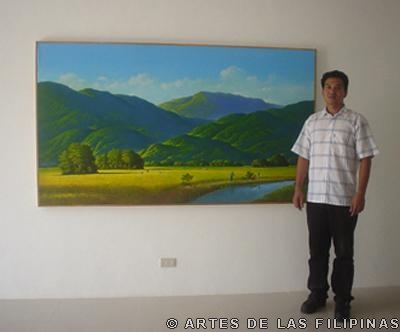
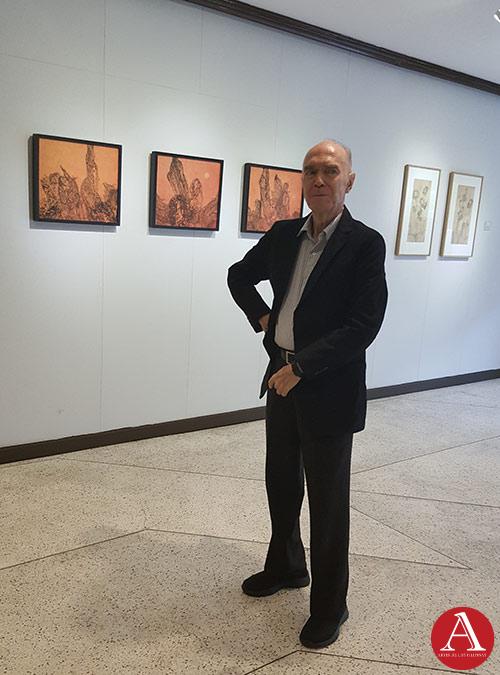
Sanso at the opening exhibition, August 11, 2016
UP Vargas Museum and Filipiniana Center
School of Sanso
The Artes de las Filipinas Research Team
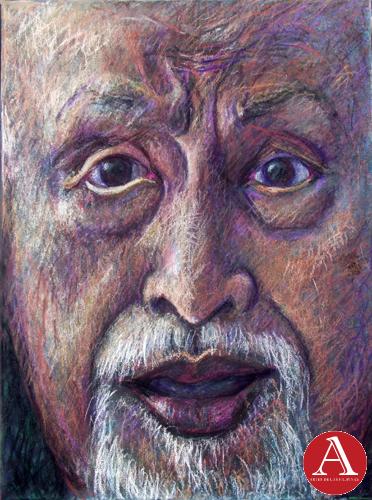
August 2016–Juvenal Sanso (1929 Spain) is a seminal Philippine modernist. His works have been collected in museums in Philippines, France and the United States. He studied Fine Arts at the University of the Philippines from 1947 to 1951. Napoleon Abueva, Araceli Limcaco, Larry Alcala were among his classmates. He then spent several months at the Accademia di Belli Arti di Roma in 1591 and did further studies at Lecole Nationale Superieure des Beauz-Arts in Paris in 1952.

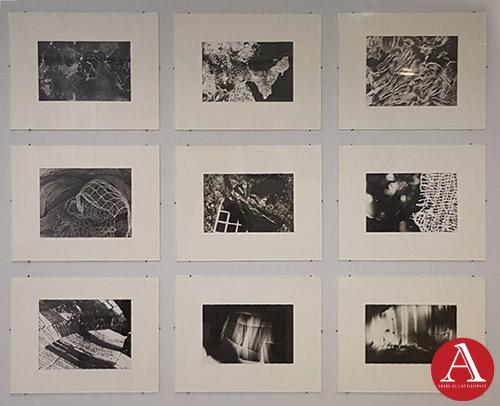
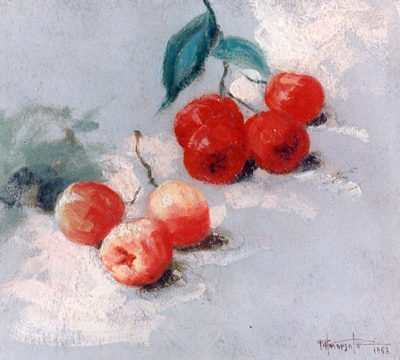
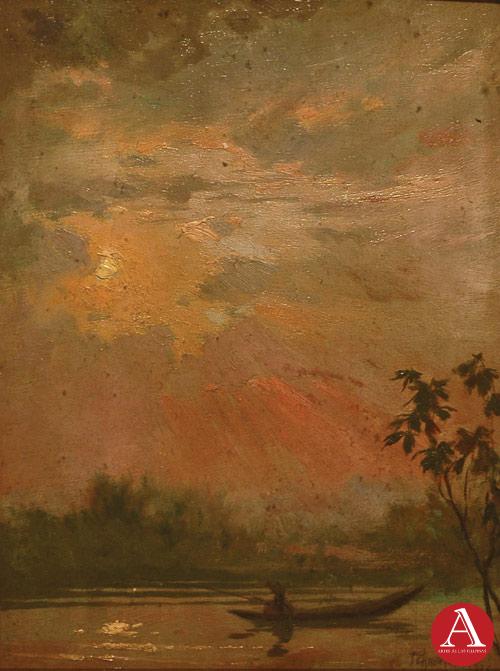
The Exhibition School of Sanso is the artist’s return to its roots, back to the University of the Philippines where his passion, values and skills in art-making were honed through formal instruction and the guidance of master mentors. They include Fernando Amorsolo, Guillermo Tolentino, Fabian de la Rosa, Irineo Miranda and Ramon Peralta Sr. The exhibition reflects on the artist‘s creative formation, the condition of art education of the time, the early style marking an emerging body of work and the eventual break away of the artist from the traditional style which was prompted by curiosity, diligence and honest introspection. The works on exhibit range from his early student plates, copperplate prints from his early years in Paris, experimental photography, and paintings which used techniques learned from printmaking. Almost all these from the Fundacion Sanso collection, a non-profit organization with the mandated of preserving and presenting the works of Juvenal Sanso. This year marks the 70th year Sanso as a professional artist.

Classes were quite small and of mixed types of students; mostly women dabbing in the arts of young men interested in commercial art careers, with only a few quite earnest about careers as artist. Out of the early post wars students emerged Federico Aguilar Alcuaz (enrolled as a special student), Jose Joya, Napoleon Abueva, Zeny Laygo and Araceli Dans as well as cartoonist Larry Alcala and couturier Pitoy Moreno. This postwar group developed individual styles distinct from the prewar era.
–Alfredo Roces, Sanso page 21, 1976.
The school which molded Botong Francisco, Vicente Manansala and many others offered a five-year course including a year of preparation. Classes on painting, sculpture, commercial art and engraving were held. The lecture system was in force and these were delivered in Tagalog and Spanish. Classes were conducted atelier style. One simply sat and drew and then the professor looked at the workover–in other countries corrective exercises were given instead and group discussions were held on the merits and defects of a student.
As can be seen, the system prevailing at the UP then was an antiquated one even for its time, but in justice to the school it should be stated that the professors excelled in instilling craftsmanship among the students. The roster of professors were the giants of the early part of the century including Amorsolo, Tolentino, Fabian de la Rosa, Irineo Miranda, Pablo Amorsolo and Ramon Peralta, Sr.
–Purita Kalaw-Ledesma, The Struggles for Philippine Art, page 7, 1974


The UP Campus on Padre Faura suffered heavily from both enemy and liberation forces shelling during the Second World War.


Farmer, oil on canvas, 1945

Portrait of a Moro Woman, oil on canvas, 1945

Unfinished Portrait of a Man of Color, oil on canvas, 1948

Ropemaker, oil on canvas, 1948
So at the beginning at the UP Fine Arts we were turning our backs on the Japanese occupation, looking at the brightly lit umbrellas and forgetting the dark barung-barong. As the technical problems and the imitational phases began to fade into the pains-in-the gut brought about by what the barung-barong symbolized and cruelly represented, the unconscious layers of my brain started to push into the open.
–Juvenal Sanso in Sanso by Rod Paras Perez, page 21, 1988


Left to Right: Araceli Limcaco, Juvenal Sanso, Tipin Eleazar, a friend, Katy Yatco and Nenita Villanueva Tsk! Tsik! Chicks! Chickens?

Pitoy Moreno in the early fifties strolls down the wilderness that was Diliman in the company of artist-classmates: Nenita Villanueva,Cheloy Limcaoco, Mary Espina, Ben Osorio and Juvy Sanso.


Sanso’s companions in the campus were Rodolfo Ragodon, Larry Alcala and Benjamin Osorio. Ragodon remembers Sanso always sowing up early for class and whiling away the time before classes doing sketches for Mang Lucio, the janitor of the art department. Ragodon did not consider Sano’s early attempts as particularly promising, rather he thought of him as a conscientious and diligent student.
–Alfredo Roces, Sanso, page 21, 1976
What was the future of the artist of that period? His lot was not an enviable one. Most painters ended up as sign painters, magazine illustrators and teachers while the sculptorss became wood carvers and tombstone makers. There were no galleries and paintings were not bought. If one wanted to purchase a painting, he had to go to the house of the artist. Only the works of outstanding artists like Amorsolo and Tolentino sold and the sales were very limited. As for the prices–an Amorsolo sold for fifty pesos and at that time was considered a lot of money.
–Purita Kalaw-Ledesma, The Struggle for Philippine Art, page 7, 1974

War Victim, oil on canvas, 1948


Unfinished Study of an Old Man with a Staff, chalk pastel on paper, early 1950s


Harvest, oil on canvas, 1950

Unfinished Study of a Man (Head and Torso), oil on canvas, 1951

Full Body Figure Study of a Man, oil on canvas, 1951

Portrait of an Old Woman, oil on canvas, ____

Reclining Female Nude, oil on canvas, early 1950s

Study of a Nude Woman, oil on canvas, 1952

Miserere, tempera and ink on paper, (mid to late 1950s)

Flower Market, serigraph retrospective special edition (1956 and 2015)


Matabungkay Trellis, ink on paper,1971

Baklad series, 1976