Purveyor of Knowledge and Emerging Publisher of Content and Visually Driven Books

February 10, 2026

May 15 — The Pahiyas Festival of Lucban, Quezon

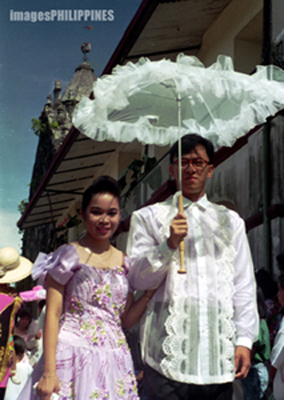
The Pahiyas festival transforms the small towns of Quezon province from ordinary to exquisite sight.

Photo courtesy of https://imagesphilippines.com (Nestor Santiago)


MAY 15 — THE PAHIYAS FESTIVAL OF LUCBAN, QUEZON

by Mailah Baldemor


The Season of Festivals is celebrated on the merry month of May. One extravagant festival that everyone is excited to see is the Pahiyas Festival in Quezon Province, which is celebrated on the 15th of May. Quezon, formerly known as Tayabas, is the second largest province in the Southern Tagalog region. The Pahiyas festival is simultaneously celebrated in the towns of Tayabas and Sariaya? Nevertheless, people go to Lucban because of its extravagant preparations which by tradition started during the 16th century as a way of thanksgiving for the people’s bountiful harvest. 


The Pahiyas festival transforms the small towns of Quezon province from ordinary to exquisite sight. Originally a pagan harvest festival, it is now commemorated in honor of San Isidro Labrador – the patron saint of farmers, peasants, laborers used to be a farmer in Madrid. According to legend, white oxen magically plowed his fields whenever he went to church. After being colonized by Spain, the legend was passed on to the Philippines. On the other hand, he was the venerated patron saint of agriculture in Mexico who was called upon by people to ensure the abundant supply of water and fertility of the land.


Pahiyas is a festival that takes a long time to prepare and celebrated only for a short period. One of the much anticipated sights to see is the colorful decoration of houses made from different fruits, vegetables, and kipings. The people of Quezon believed that the practice started when farmers offered foods at the foot of Mount Banahaw. The ritual changed over time and the food offerings was brought to the church. In the old times, farmers brought all their harvest to the church for blessing. They believed that this ritual was essential because they were told that failure to do so could bring deprivation, dearth and misfortune to the town. Later on, the farmers received more blessings and their harvests were bountiful. The Lucban church, known to be the oldest church in the town, soon became the place where the pahiyas festival was held.


The Pahiyas Festival is celebrated in honor of San Isidro Labrador, the patron saint of farmers

Photo courtesy of https://imagesphilippines.com (Nestor Santiago)


To keep the tradition alive, people agreed to display their harvest in front of their homes where the parish priest would come to bless the harvest during the procession of the image of San Isidro Labrador, the patron saint of farmers and in honor of the festival that is being celebrated.  Because of the economic situation, the town decided that every year only assigned houses around the town would participate by means of a competition, the best decorative and creative design of the Pahiyas during the festival. Houses used different fruits, vegetables, hats, baskets, paper-mache and kipings. After the competition, all the decorations will be thrown away to the people. But the important thing to prove that you have been to Lucban is seeing the colorful kipings and tasting the delicious Pancit habhab and longganisang Lucban. The pancit habhab is made from rice flour. These noodles were sold and served on a piece of banana leaf on the streets. It is eaten straight from the leaf, the habhab style. The longganisang Lucban is made of ground pork with fat, oregano extract, paprika, salt, pepper & garlic.
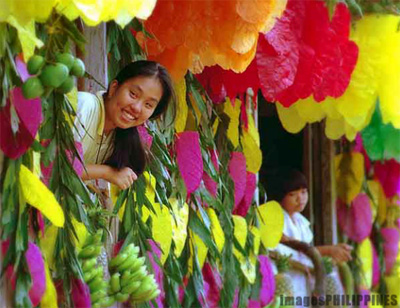


The houses in Lucban during the Pahiyas festival are decorated with fruits, vegetables, and kipings.  

Photo courtesy of https://imagesphilippines.com (Samuel Peralta)


Kiping is leaf-shaped wafers made of rice dyed in brilliant colors. The leaves used include the kabal, kape (brown coffee tree leaf), talisay (umbrella tree), kakaw (cocoa tree), and saba (cooking banana). Rice paste is used to create the kipings. They say, the procedure in making the kiping is a secret and only the chosen ones will be entrusted to make it.

So, get your best and favorite sneakers or rubber shoes, water bottles, cameras, video camera, hats, and umbrellas. Welcome to the Pahiyas Festival!

 

Ginto A Golden Heritage From Our Filipino Ancestor
GINTO A GOLDEN HERITAGE FROM OUR FILIPINO ANCESTOR March 2016–This exhibit feature ancient ornaments crafted by our Filipino ancestor from 700 to 1,200 years ago. These form part of the Bangko Sentral...
lee mas...
Private Collections Art Book Launch
Originally written by   Carmelita Estrallado, Eddie Chua, David Consunji Charlie Cojuangco Patrick Reyno Ester Gabaldon, Ed Liao Artur Tanco and Manny Zialcita Eddie Chua, David Consunji Alexander...
lee mas...
Leo Abaya's Dialogue of Ideas and Images
September 2016--Leo Abaya has an enviable sense of timing. In 1993, his student plate of a collage study of images from magazines, Views and Points of View won the Jurors Choice at the Art Association of the Philippine Annual Art Compe...
lee mas...
HERNANDO R. OCAMPO
HERNANDO R. OCAMPO
BIO – DATA (as of March 12, 1971) I. Date and Place of Birth: April 28, 1911, Sta. Cruz Manila II. Name of Father: Emilio Ocampo y Salterio III. Name of Mother: Delfina Ruiz y Santos IV. Name of Wi...
lee mas...
Bonifacio Nicolas Cristobal: Rediscovering a Forgotten Great
June 2012-- Bonifacio Cristobal’s artistic influence was as great as his contemporaries. He began his painting career in 1937 after obtaining a Certificate in Painting from the UP School of Fine Arts. Upon his gr...
lee mas...
The History and the 1940s Graduates of the University of the Philippines School of Fine Arts
March 2014--The School of Fine Arts was established by authority of Act No. 1870, founding the University of the Philippines which was enacted by the Philippine Assembly on June 18, 1908. The School was opened to students in June, 1909. It was first housed in a building rented by the University at...
lee mas...
Mandaluyon, San Juan, Deodato, Salvador and Juan Arellano
March 2016--It was in the best of times, in a silence of pastures and green land. My father, the architect-painter Juan M. Arellano was born in the Tondo district of Manila in 1888. He was schooled at the Ateneo Municipal...
lee mas...
Photo-Art Artist: Alvin Villaruel
OCTOBER 2008 Alvin Villaruel belonged to that generation of young artists who excites and intensifies the Philippine contemporary art. He began his career in 1998 after receiving his diploma from the Unive...
lee mas...
Old Master of the Visual Arts Antonio Austria (second of two parts)
Austria started his teaching career in the University of Sto. Tomas in 1969. Students who knew Austria when he was still a professor describe their experience with Austria, Takot kami ma-late sa klase ni Si...
lee mas...
Carlos Valino Jr. Retrospective Exhibition Obra ni Val
June 2017--Valino grew up in Pre-war Philippines, in the small town of Aduas, Cabanatuan, Nueva Ecija. He survived the Japanese occupation, preserved as a self-taught young artist, and entered the University of the Phili...
lee mas...