Purveyor of Knowledge and Emerging Publisher of Content and Visually Driven Books

January 30, 2026

Rubens masterpiece "made for public" Artist chose "cheap and cheerful" wood


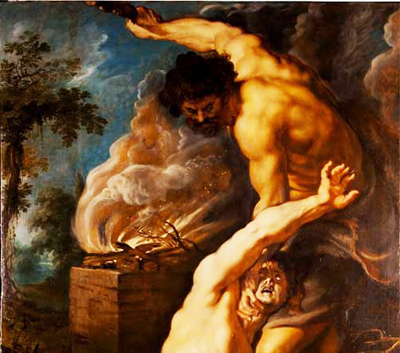
Rubens Cain Slaying Abel, around 1608-1609 

Rubens masterpiece “made for market” Artist chose “cheap and cheerful” wood
The Art Newpaper

January 2012
–The restoration of a painting by Rubens from London’s Courtauld Gallery has revealed that the work was probably not a commission, but created for the speculative market. Cain Slaying Abel, around 1608-09—one of the most significant works by the artist in the Courtauld’s collection—is due to go back on display next month, following an 11-month project to clean the work and address structural issues. The money for the treatment came from the Bank of America Art Conservation Project, which launched a conservation grants programme in 2010.

Although scholars have long known that the painting belonged to a group of works produced following an eight-year trip to Italy, where Rubens studied pieces by Michelangelo and Caravaggio, a dendrochronological analysis of its panels revealed that the work was created almost immediately upon the artist’s return to Antwerp. The fact that the oak boards are made from sapwood (the outermost, younger wood) has led conservators to speculate that the painting was for the art market. “It was typical for a client to buy panels for the artist, and in doing so, [the client] would normally buy the best quality materials,” says the conservator Kate Stonor, who explains that sapwood is not ideal because it is soft and sweet, making it prone to woodworm. “We think Rubens bought the panels himself and chose the ‘cheap and cheerful’ option, knowing that the work was for the art market,” says the conservator Clare Richardson, who also worked on the piece.

Infra-red imaging revealed line drawings beneath a tree in the background, which are uncharacteristic of Rubens and may be the work of a landscape artist.

Aside from areas of paint loss and layers of varnish that had yellowed, and, in some cases, became opaque, the most pressing concern related to the work’s cradle, a late 19th- or early 20th-century addition that was restricting the panel’s natural movement and was full of woodworm. The glue was beginning to fail and the panel was starting to pull away from the cradle, causing an unnatural inward curve of the boards, which resembled a miniature mountain range. This curvature also caused disfiguring lines that cut through the figures’ marble-toned flesh.

“One of the greatest benefits of the [treatment] is that we are no longer fighting with the condition of the work… the piece now really speaks for itself,” says Caroline Campbell, the curator of paintings at the Courtauld.

The Courtauld’s chief conservator, Graeme Barraclough, has constructed a bespoke frame with a built-in support system that will “accommodate the natural curvature of the board, allowing it to move without imposing stress on the painting”, unlike the cradle that previously kept it in place. “It’s like support hose, rather than a rigid corset,” Stonor says.

SOURCE: www.theartnewspaper.com

Antonio G. Dumlao: The Forgotten Great
December 2011--In the not so distant past, Antonio Gonzales Dumlao was a big name in Philippine art. He was a contemporary of Fernando Amorsolo and Vicente Manansala who began his career during the late the 1930s pa...
lee mas...
Accustomed Othering in Colonial Writing
September 2015--There are at least three major discursive issues that can be extracted from the document, Customs of the Tagalogs written by Juan de Plasencia in 1589, if we are to put socio-political context into the te...
lee mas...
Modern and Contemporary Artist: Roma Valles
January 2009 -- It has become a commonplace in contemporary art that a work has to be compositionally busy or wisecracks in a variety of forms. In Roma Valles' case, her technically ambitious but masterfully works, much o...
lee mas...
Lex Tuviera's Breezy Beach and Secret Gardens
Lex Tuviera’s Breezy Beach and Secret Gardens by: Christiane de la Paz September 2014–In 1978, Lex Tvbiera received his first commissioned work from Emmi Barbin, an ardent art collector based...
lee mas...
The American Imperialism in the Philippines
November 2013--American imperialism came to the Philippines at a time when the Filipinos were still euphoric at having declared their independence from Spain and the First Philippine Republic, led by Gener...
lee mas...
Galleria Taal's Select Photo Exhibition
December 2016--This ancestral house was built circa 1870 by Domingo Ilagan and Maria Martinez (who died both in 1903). They had six children: Aniceto Ilagan, Rosario I, Villanueva, Candida I. Barrion, Conception I. Sison...
lee mas...
Book Review: Philippine Ancestral Houses Fernando Zialcita and Martin Tinio
The two hundred and sixty-three pages of the coffee table book, Philippine Ancestral Houses, is a richly illustrated history and analysis of the bahay na bato - - how it came about, where, when, and how i...
lee mas...
Dina Gadia's Assembling Collage of Contemporary Art
July 2011-- Collage has a short and distinguished history and was firmly established as an art form of novelty in the 1920s and 1930s. Today, the popularity of collage is on the rise again and a new generation of young art...
lee mas...
Lamberto R. Hechanova: Lost and Found
June 2018-- A flurry of renewed interest was directed towards the works of Lamberto Hechanova who was reputed as an incubator of modernist painting and sculpture in the 1960s. His early works comprised of assemblages, collage...
lee mas...
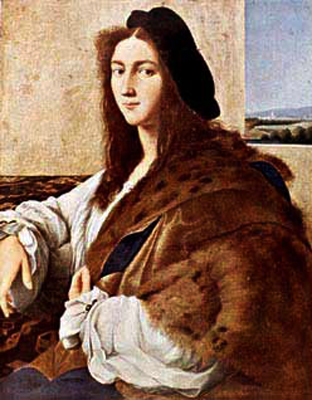
Poland's long-lost Raphael found
August 2012--Poland's long-lost masterpiece, attributed to Raphael and feared destroyed by many, has been re-discovered in a bank vault in an undisclosed location. Portrait of a Young Man, around 1513-1514, from the Czartoryski f...
lee mas...