Purveyor of Knowledge and Emerging Publisher of Content and Visually Driven Books

March 15, 2026

The Angono Petroglyphs


The Angono PetroglyphS

by: Teta Limcangco


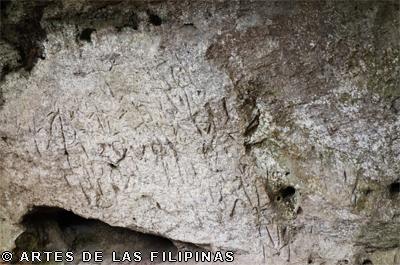
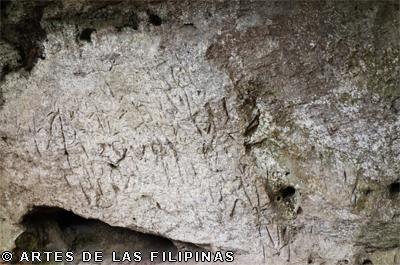
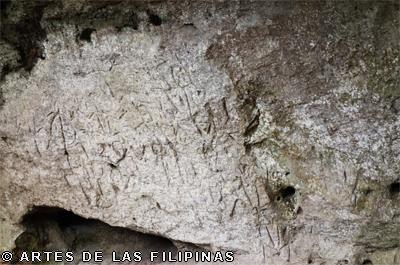
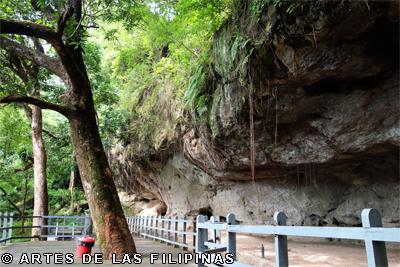
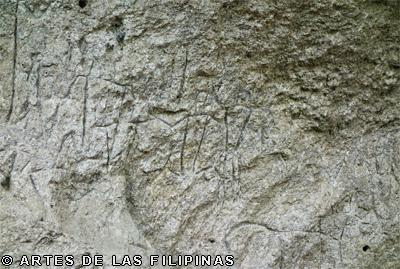
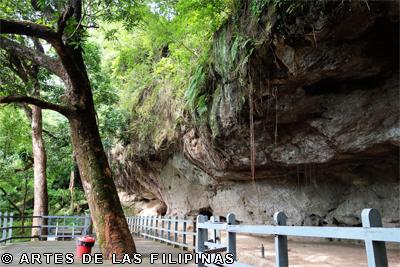
The Angono Petroglyph is a recent archeological breakthrough during the 80’s found in the mountainside of Angono and Binangonan by Carlo “Botong” Francisco. It is a stylized anthropomorphic and zoomorphic forms etched on the rock shelter.


In the cave, you will see the different carvings of the tribes settling in this cavern. It is said to be the oldest, known art carvings found in caves in the Philippines. Dated approximately 1000 years B.C. Originally, there were 127 engravings of human and animal figures in stick forms but due to negligence and vandalism of visitors, some rock carvings have disappeared.
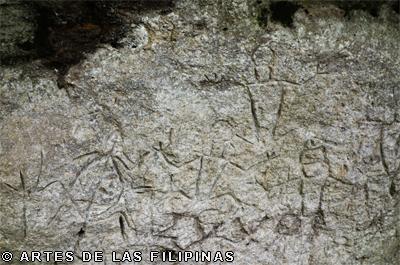


The conservation and site development of the petroglyph was supported by the World Monument Watch Fund and the Department of Tourism. Since then, the NationalMuseum was in-charge of the day–to-day operations of the famous petroglyph. Through the years it is said that the rock formation was described as fairly stable, however, continuous monitoring and documentation was recommended in order to establish the rate of deterioration due to the micro-environmental change at the site.


Many years ago, it was believed that there was a language barrier and the only form of communication is through the use of symbols. Symbolisms and figures are used to convey what our ancestors think and feel as part of their everyday life. Carving those symbols was also their means of recording their data and activities in their lives such as the celebration of birth, feast and death. Through the years, the cavemen may have migrated from one place to another. But studies have shown that intermarriages took place with other tribesmen that resulted to the exchange of different skills and abilities.


The petroglyph cave is near Laguna, Binangonan and Angono, Rizal—cities and towns known to be havens of artistry and wood carvings. The love for their craft could possibly be the connection linking the Rizalenos and the Laguenos together and they have their works of art to prove it. Some of them might even be descendants of the original cavemen who made these cities excel in the field of art. It has also become a major factor as to why a number of industries ranging from micro- cottage to large scale and heavy manufacturing industries are proliferating in the area.


The petroglyph is indeed a national treasure that Filipinos should be proud of. I am certain that there are more wonders in our country that are still waiting to be discovered. I found one in Angono.


(Teta Limcangco graduated with a degree in Fine Arts major in Painting from the University of the Philippines. She joined various group exhibitions as a student and is now making a comeback to pursue painting. The article is based on a paper she submitted for a class during college.)


A Guide to Malacañan's Presidential Museum and Library
July 2012--The Presidential Museum and Library is located in Kalayaan Hall, originally built in 1921 during the American colonial era as the Executive Building and today a wing of Malacañan Palace, the historic and official seat...
lee mas...
Art Restorer: June Poticar Dalisay June Poticar Dalisay
I love my job because it challenges my person, says artist and art restorer, June Dalisay. Its a relationship between myself and the object infront of me. I have always wanted to become a doctor but we co...
lee mas...
angono0211
The Angono Petroglyph
The Angono Petroglyph by: Teta Limcangco     The Angono Petroglyph is a recent archeological breakthrough during the 80’s found in the mountainside of Angono and Binangonan by Carlo “Botong” Francisco....
lee mas...
The Journey to Art of Joven Ignacio
There is something beguiling about painting new and spectacular flora. They infiltrate our reception of images and they carry particular poignancy. The sweetness of a nightingale and the tranquility of wh...
lee mas...
Ambrocio Mijares Morales (1892-1974): Engraver, sculptor, art professor and supporter of the Katipunan
May 2014--Engraver, sculptor, art professor and supporter of the secret organization, the Kataas-taasan, Kagalang-galangang Katipunan ng mga Anak ng Bayan (KKK), Ambrocio Morales’s earliest recorded sculpture in 1927 was the bust of Bonifacio Bedaña (alias Suyod), the president of th...
lee mas...
Noel Soler Cuizon's Gesamtkunstwerk and Everything in Between
April-May 2017—The public exhibition of Noel Soler Cuizon’s works began in 1987 when he was a member of Hulo, a group of alumni students of the Philippine Women’s University who explored non-traditional...
lee mas...
The Angono-Binangonan Petroglyphs
July-August 2013--A geological study in Tres Hermanas in Antipolo was undertaken by the National Institute of Geological Sciences, University of the Philippines. In this site, the Plio-Pliestocene deposit was identified as Laguna Format...
lee mas...
Gallery Owner: Vic Salta of Artistree Gallery
Vic Salta is a legendary art collector in the seventies who opened Artistree gallery in Shangri la Plaza to make first-rate works of art available to learned collectors. He chose not to deal with ordinary piece...
lee mas...
The Long Tradition of Hand Embroidery in Taal, Batangas
The town of Taal, Batangas had a long tradition of hand embroidery since the turn of the century. Its intricate, well-embossed hand embroidery made it increasingly a refined art of society. It boasts of...
lee mas...
Shouting in Bronze: The Lasting Relevance of Andres Bonifacio and His Monument in Caloocan
Amidst the concrete jungle in the middle of the city of Caloocan, amongst the smog of pollution, stands the dignified figure of Andres Bonifacionational hero, Founder of the Katipunan, Father of the Filip...
lee mas...