IF ART JOURNALISM IS IN TROUBLE, WHAT ABOUT PUBLISHING?
by: Jamie Camplin
Jamie Camplin is the managing director of Thames & Hudson, a publishing firm based in London, England. He wrote an opinion piece for the June 2009 Art Newspaper that may interest general art readers and museum publishers. Camplin raises the question: if art book publishing is to remain vital, how do we keep producing fresh, thoughtful publications at a reasonable price point?
Is there a crisis in art book publishing? Most people who love art—collectors, gallery-goers, curators, critics, dealers and artists themselves—understandably take it for granted that there is an audience for books about it. There’s a touch of arrogance about this, though an engaging version of arrogance because of the positive emotions involved. If your passion is Greek bronzes or Winslow Homer or Olafur Eliasson, you needn’t worry whether your enthusiasm is shared—unless, of course, you publish art books.
Art-book publishers also love art. Currently, they tend to be suffering not from arrogance but from amnesia about their trump card. In any other business, this amnesia would be called “lack of confidence in the product”. In publishing it tends to involve too much muttering about the recession, instead of a vigorous focus on marrying the practical (conceiving, creating and bringing to market the books) with the precious (their subject matter—art).
The challenges are real and substantial, but they are only obliquely connected with the economic downturn that is currently creating problems for the commercial art world, as well as for museums and other cultural institutions. Of these challenges, three are intensely practical and one is a little more philosophical, but with practical consequences.
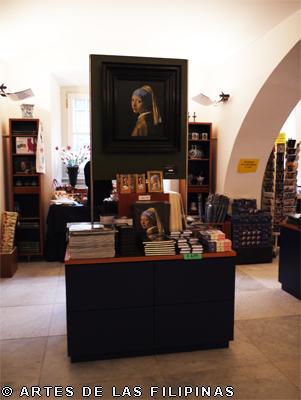
The first is the obvious one of reaching consumers. The growth in public interest in art during the past two decades has not been underpinned by an effective retail infrastructure. Many museums now offer a smaller range of books, in preference to non-book merchandise, which is a dereliction of their duty as custodians of cultural education. The dominant book chains around the world ignore the evident public enthusiasm for art and succeed only in proving that if you do not display art books, you do not sell them. The independents suffer from price competition and the dominant power of Amazon in driving prices down to unrealistic levels.
Second, this preoccupation with low prices has had the pernicious effect of devaluing books in the minds of consumers, with especially problematic consequences for art-book publishers, whose costs—of design, production and copyright—cannot be fully reflected in retail prices. The worst of these costs are copyright fees because they are levied by the artist rights’ societies at seemingly arbitrary levels, whereas all other aspects of the intellectual property of a book are governed by commercial negotiation; what can be afforded in the market place.
A third challenge is the need for a culture of expertise. Anyone can publish a book via inexpensive technology, but the editorial, design and production skills necessary to produce an art book worthy of its subject matter can only be created by painstaking investment.
Few of the various business models for an art-book publisher deal with this need effectively. University presses can sometimes use their endowments to buy prestige and acquire major art books, but their day-to-day activities tend to focus on academic disciplines for which “the word” is dominant and on production values ill-suited to art. Corporate publishers also like the prestige of art books, but lack the specialised expertise necessary to nurture them. Small houses are often well informed but under-capitalised. Museum publishers are suffering from staff cutbacks. The message is clear, but out of tune with our times: expect to invest for the long term in people and books, or don’t try at all.
There’s a fourth challenge: how to write about art, especially contemporary art. Sometimes it feels as if we have reversed Oscar Wilde’s dictum, “Life imitates Art far more than Art imitates Life”, conveniently forgetting that Picasso, as so often, had set us on a much more important path when he said: “Art is a lie that makes us realise truth.” Certainly, if the only thing to distinguish “art” from “life” is that you find it in an art gallery, the discourse about it—the articles and books people write—is in trouble. One reaction is to enter a philosophical cul-de-sac, a dead end of theory and obscurantism. Another is to appropriate art for contemporary society’s great mass-market fuel: celebrity. Neither of these help the art-book publisher’s first duty, which is to encourage people to look at art and help them understand it. The result of this is not philosophical, but practical—a dearth of good art writers.
Despite all these challenges, could there be a golden age around the corner? Art-book publishing is not for dreamers, but there remains a vast potential as an incentive for triumphing over the challenges I have outlined. The essential point, crudely put, is the strength of the material. If “art” is “the expression of creative skill through a visual medium”, that medium might be painting or sculpture, but it might also be a much wider range of activity—fashion, architecture, design or photography. If today’s audiences have largely lost the Classical and Christian culture of their forebears, that does not destroy the great western art of the past; it just makes it fresh terrain for the publisher. If eyes have been opened to the whole world via global travel and the movements of peoples, a whole new range of canvases is now revealed to us. If we moan about “dumbing down” in the face of the visual noise that comes our way daily, it only means that we are living in the age of “more”—more that is mediocre, but also more that is astonishingly creative.
Art has a very strong hand to play in the 21st century. In an era in which technology makes most products more uniform but in which printing technology can show art’s strengths as never before, in which fragmenting marketplaces and marketing platforms need all the help they can get, and in which the power of the visual to sway emotions has never been stronger, art’s distinctiveness, creativity and originality give any art-book programme a strong start.