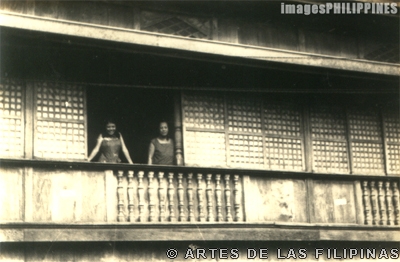
ISLAMIC ART IN THE PHILIPPINES
by: Jericho Paul C. Santos
October 2011–Islam as a religion has long been established since the early A.D. 600s. Along with its emergence around the world, it also paved way for the development of its own unique stlye of art. Islamic art place emphasis on creating an artform that is built on the beauty and respect for the teachings of Islam.
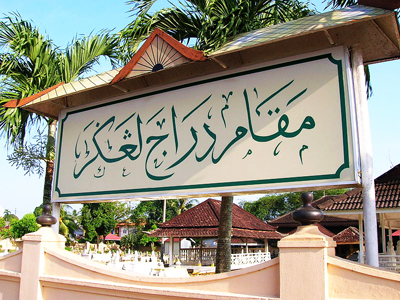
Islamic Calligraphy
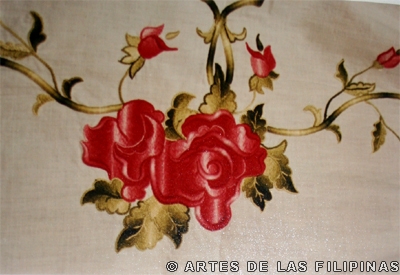
Islamic art is characterized by designs of flowers, plant forms and geometric designs. It is used in calligraphy, architecture painting, clothing and other forms of fine art.
As Islam spread around the world, this distinct form of art has become an integral part of the identity of its followers, including the Philippines.
The Development of Islamic Art in the Philippines
In the 13th century, traders and missionaries have introduced the religion of Islam in the Philippines. Islamic art meshed with ethnic culture and produced a Filipino Muslim art that reflects the ethnic background and Islamic identity of the people. During the Spanish colonization and American occupation, Islam has been concentrated mostly in the South but this did not halt the flourishing of Islamic art.
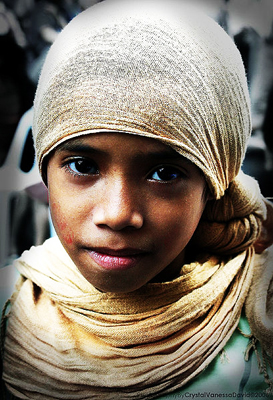
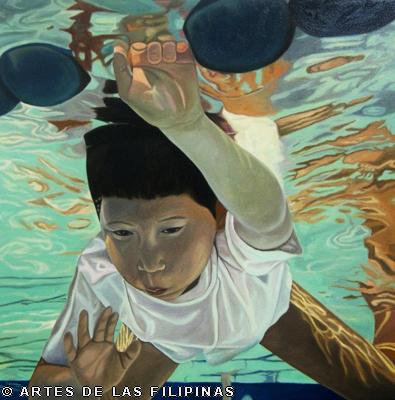
A Filipino-Muslim Boy
Global development, however, exposed the Filipino Muslims to its Middle Eastern roots, who have become their main source of representation of Islam’s art.
Art of Filipino Muslims
Islamic art in the Philippines is found predominantly in Muslim ethnic groups where every group offers their own distinct flavor of Islamic art. This distinct art is commonly seen in homes, clothing and places of worship of Filipino Muslims.
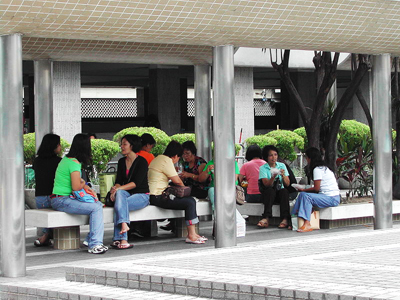
Overseas Filipino Workers in the Middle East
Mosques in the Philippines have a common architectural feature that is similar with its Southeast Asian neighbors. It is made of light materials such as wood, bamboo and cogon grass and was used in the building of the early types of mosques but these light materials did not last long. Today’s mosques, however, are now structurally patterned after the design of its Middel eastern counterparts.
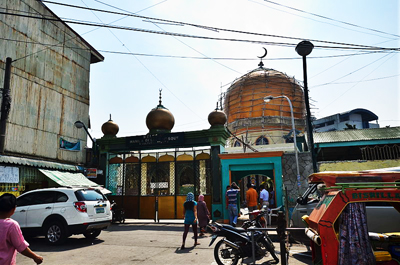
Philippine Mosque
One characteristic of Islamic art is the absence of human form. This tradition comes from the belief that any figural representation should not be used for the purpose of worship. This is evident in the architectural design of mosques in Mindanao where calligraphy is used as the main form of expression. However, it is always kept in a minimum.
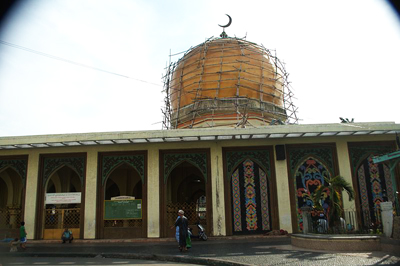
Philippine Mosque
The only reminders of Filipino Muslim art inside mosques is the traditional art form known as Okkir. This art form is believed to be of Hindu and Chinese influences. Okkir uses geometric and floral artwork. One popular motif of this art form is the use of an imagery of a dragon or serpent.
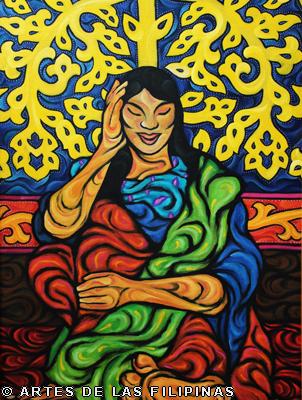
Okkir Design in Ramil Tawasil’s Painting
There are other figural representation in Filipino Islamic art such as the buraq, a winged horse with a head of a woman. This imagery relates Prophet Muhammad’s ascension to heaven. There is also the other famous creature — the sarimanok, a symbol for bravery and nobility.
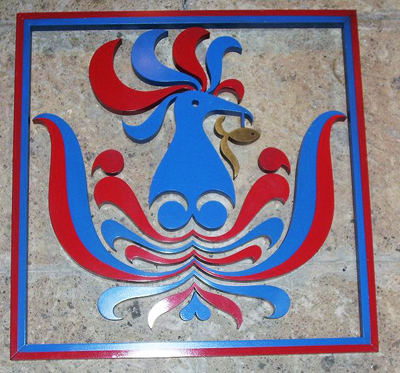
Sarimanok
Philippine Muslim homes represents their identity therefore Islamic art is seen in their houses. These houses usually contains framed calligraphy of Qur’an passages in its walls. These ornaments usually are made from Muslim dominated countries like Malaysia, Egypt and Saudi Arabia brought home by overseas Filipino workers as mementos of their pilgrims.
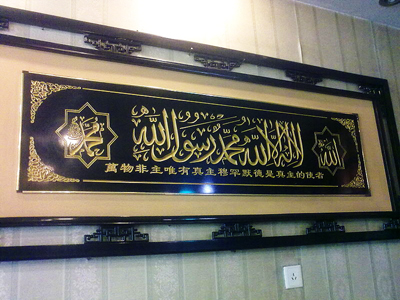
Frames with Qur’an Passages
Clothing reflects the stlye and colours of their ethnic background. A design related to Islam thatis used in the Philippines is the batik cloth design. This kind of design traces its influence from Indonesia. It contains abstract themes with geometric and floral design. However, human and animal depiction is a rare motif in batik.
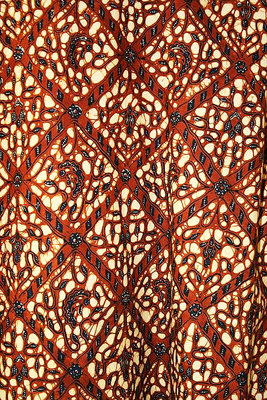
Batik
Today, Filipino Muslims believe that following dress requirements shows their Muslim identity. But they have now considered the Middle East as reference for the proper Muslim dress. Traditional design is still present in modern dresses however the overall look now follows according to how Muslims have dressed globally which is loose and more open to Western influences.
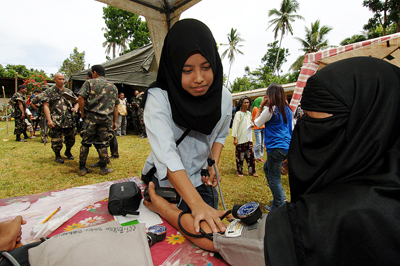
More Westernized Filipino Muslim clothing
For a long time Islamic art in the Philippines has been linked to its ethnic background. But globalization has contributed to the changes in the visual expression of Islamic art. From developing an art that is centered in ethnicity, there has been a shift in the adoption of forms and styles. House ornaments have been imported from other Muslim countries and outfits. Dresses that was once limited to ethnic background has now been link to the global Muslim style referencing the Middle East. And even the reconstruction of mosques are now uses sturdier materials that is inspired by modern Islamic design.
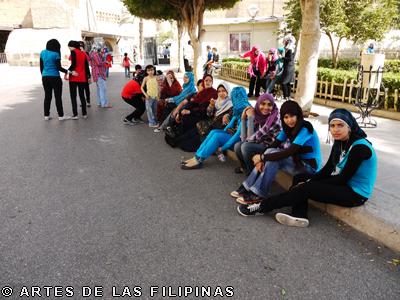
OFWs
With the continued increase employment and growing number of students going overseas, the Middle East continues to play a significant role in shaping the future of Islamic art in the Philippines.
REFERENCES
Kolig, Erich. Identity in Crossroad Civilisations: Ethnicity, Nationalism and Globalism in Asia. Amsterdam: Amsterdam University Press, 2010.
Levy, Janey. Islamic Art: Recognizing Geometric ideas in Art. Amsterdam: The Rosen Publishing Group, 2007.
Madale, Nasagura. “A Look at Philippine Mosques.” National Commission for Culture and the Arts, 6 Oct. 2003. Web. 6 Oct. 2011.
Jericho Paul C. Santos is a graduate of Creative Writing and Visual Communications from the University of the Philippines. His areas of interest are in the field of animation and film. He is also the creator of the comic strip, Mayclub (gomayclub.com).